This project is a multi-room escape game built around ASCII art, item interaction, and environmental puzzles. Instead of relying on graphics-heavy presentation, it creates atmosphere through text, layout, and player discovery.
The challenge was to make a minimal visual format still feel interactive, readable, and intriguing. Because the game uses text and ASCII scenes, each room needed to do a lot with very little. The interface had to clearly communicate where the player was, what they could investigate, and how to interact, while still preserving a sense of exploration.
At the same time, the design balances functionality and mood. Players are given just enough structure to understand movement and object use, but are encouraged to experiment, notice details, and test interactions as they move through each space.

The core of the project is a system built around observation and experimentation. Players move through multiple connected rooms, inspect areas, collect items, and use actions to uncover clues. I introduced both item-based and verb-based interactions to make the experience feel more exploratory than a simple command flow.
This creates a more playful logic. Instead of selecting obvious options, players are encouraged to think through what might be possible in the environment.

Each room builds on this system while introducing new interactions and subtle shifts in tone. Ordinary objects are presented in ways that hint they may matter later, and several moments lean into humor or unease, giving the game a slightly off, memorable feel.


The puzzle design relies on layered discovery. Some clues are visual, some are textual, and others only make sense after earlier interactions. Progression comes from connecting these pieces across rooms rather than following a single obvious path.


As the player moves through each room, the experience gradually shifts from observation to escape logic. By the final space, interactions are simpler, but feel earned because they build on everything discovered earlier.
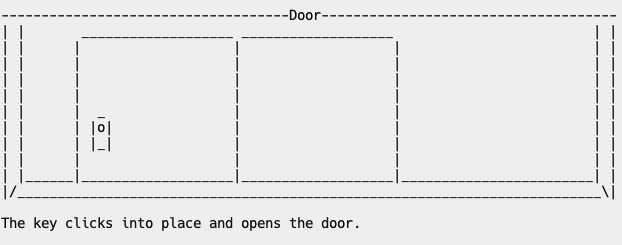
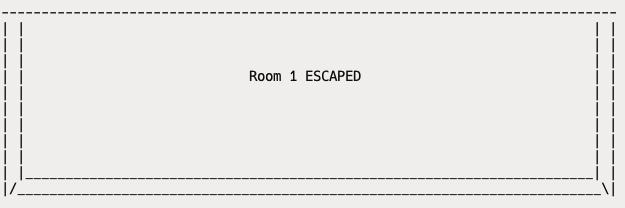
This project explores how much atmosphere and interaction can be built with minimal visual means. It combines puzzle design, writing, and interface systems into a compact experience where discovery is the primary reward.
Take a look at my resume!